
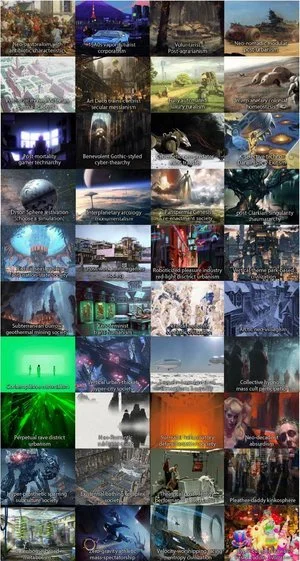

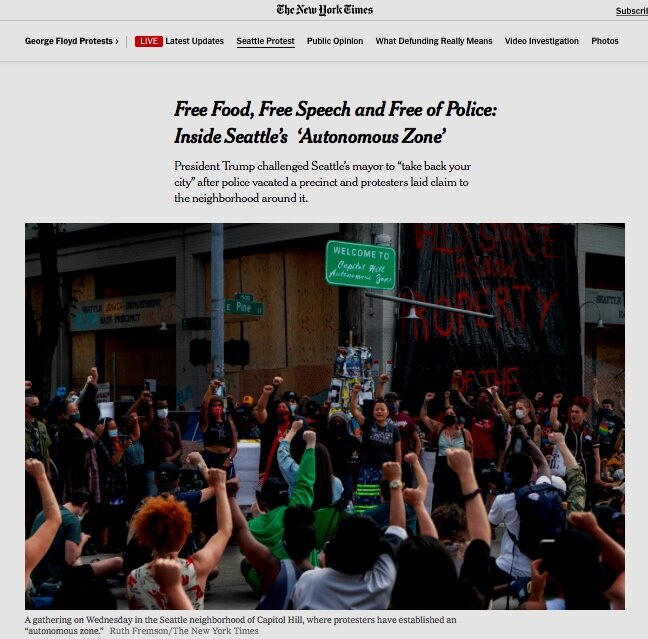
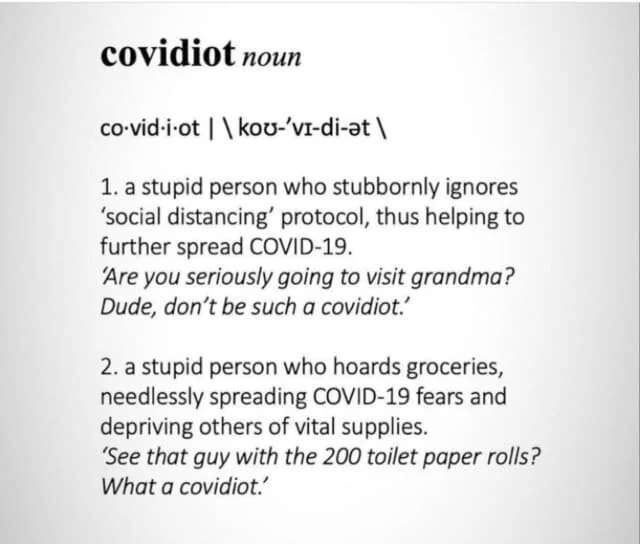
The Urban Thicket

The following are my lecture notes for my 21st century history course (which I most recently taught in the spring semester of the 2112-2113 academic year), delving into the fact that the present is quite different from some of the past visions of the future (which is now the present).

“Need I recall that Whitman wrote an apostrophe to the locomotive, that Emerson said a steamship sailing promptly between America and Europe might be as beautiful as a star, and that Thoreau, who loved to hear the wind in the pine needles, listened with equal pleasure to the music of the telegraph wires?” Lewis Mumford, The Golden Day (1926), 277.

Never take the present shape of things for granted. That the present looks the way it does was never a guaranteed outcome in the past. As Walter Benjamin wrote (a third of the way through the twentieth century), the “angel of history” flies backwards into the future, “[h]is face . . . turned toward the past. Where we perceive a chain of events, he sees one single catastrophe which keeps piling wreckage upon wreckage.” History is this “pile of debris [which] grows skyward,” while the angel is propelled forward on a storm that “we call progress.” Cities, of course, are archives: layered, curated, selectively-preserved, bricolage piles of debris reaching skyward. And I think we need to think of them like this. What we have today is the result of a series of cultural attitudes, incentive structures, and aesthetic preferences that allow us to curate, design, assess, and selectively eliminate elements within the built environment. That today’s cities would be an “urban thicket”—a dense, multi-layered, vertically-oriented, tangibly complex, 3-dimensionally-navigable, labyrinthine, rhizomatic, aesthetically-diverse, multi-use, energetic interweave of structures and infrastructures—was not even conceivable outside of dystopian fiction 100 years ago. And yet, this vision, as I hope to show, came to displace a competing, sterile vision of the future city that fetishized open space, greenery, and sleek, simple geometries.

“All cities are geological,” the Situationists conveyed in 1953. There is something quite sedimentary about urban conglomerations. The additions and subtractions made to the city testify to the choices of every era. The twentieth century, during which time Benjamin was writing, made most of its additions outwards. But in the second half of the last century, as you know, much of our development has been vertical. The spatial footprint of our cities has actually shrunk—something that Iannis Xenakis predicted in “The Cosmic City,” when he speculated that “[t]he liberation of the ground and the technical advances of such a city will result in the recovery of vast stretches of land.” In fact, the majority of our greenhouse farms, algae pools, and solar collectors stand upon the foundations of suburban houses and shopping centers that once served as the primary domiciles and material depots for people living in developed countries during that troubled century. While some suburbs still stand, most were too impractical to salvage, since their low density did not lend itself to municipal climate control or to rapid transit. In a changing climate, with its extreme weather, variable air quality, and rising infrastructure costs, the suburbs declined into highly stratified slums and ethnicized survivalist enclaves—a situation that was largely mitigated by the Great Buyout. Many of the wild, untamed jungles and forests that stand right at the edges of our cities today were also previously farms and ranches that were no longer needed when we switched to synthetic proteins. Where it used to take hours to reach this kind of wilderness from the center of cities, it now simply requires crossing a bridge, tunnel or outer transit ring.

If the sprawling suburbs and exurbs were clearly acknowledged to be deleterious by midcentury, at the beginning of the last century, when our society was just beginning to reckon with the ecological and cultural crises that horizontal development had wrought, our contemporary, vertical way of life was far from obvious to most people. The future people imagined then was very different from what we, in actuality, have now. As theorists and historians of temporality from that time knew (people like Mark Fisher and Reinhart Koselleck), imagining the future from inside of the present always runs the risk of reflexively reproducing the status quo, with its limited aspirations and limiting anxieties. And yet, the most prolific vision of the future at that time was extremely neurotic, sterile, and isolating. Most depictions of futuristic cities fell into one of two basic categories—what I will call, for simplicity, white cities and noir cities. If you were to search, in their barbarically distracting and advertisement-strewn version of the Internet, for pictures of a “futuristic city,” you would see this clear taxonomic dichotomy. White cities were nearly always rendered as wholesome, sunny, orderly, highly formalistic places with spaced-apart, sculptural, and nearly always white buildings with generous green spaces between them (often with vegetation spilling out of the buildings). Noir cities were the alter-ego of these: dark, hyper-dense, chaotic, neon-illuminated cities that are almost always depicted at night, in the rain. Typically, the former was associated with more-or-less optimistic renditions of the future, whereas the latter was associated with dystopian renditions. Correspondingly, the former was the go-to aesthetic of the optimistic “solarpunk” genre (which of course prefigured the contemporary ecological ethos), whereas the latter was the go-to aesthetic of the dystopian cyberpunk genre (which of course prefigured the contemporary aesthetic and trans-humanist cultural pathos).

Both visions of the future were rooted in nineteenth and twentieth-century ideas and concerns about the city: the noir city was an echo of the overcrowded, unhealthy, polluted industrial city that shocked and horrified middle-class Progressive reformers (which spurred the outward development of the ensuing century), whereas the white city was an echo of its supposed remedy: the neoclassical “City Beautiful” ideal and the garden city suburb—with shimmering towers replacing the cul-de-sac (with no less isolation or sterility).

It would be difficult to overstate the white city’s grip on our culture’s collective imagination about what a desirable future urbanism should be like. White cities were the suburbanite’s idea of the future. Their big, open green spaces, landscaped parks, gardens, and urban forests between buildings evoke the sprawling suburban golf course communities of the then-contemporary world. A central flaw of the white city was its obsession with bringing “nature into the city,” which led to a fetishistic amount of ground-level green space—clearly a residual holdover from a time in which urban planning was tasked with bringing light, air and views into the polluted slums of nineteenth-century industrializing cities (remember: they still used combustion for heat and propulsion at the time!). 

Karl Marx warned us, well over two hundred years ago, how difficult it is to imagine new things; that “[t]radition from all the dead generations weighs like a nightmare on the brain of the living. And just when they appear to be revolutionizing themselves and their circumstances, in creating something unprecedented, in just such epochs of revolutionary crisis, that is when they nervously summon up the spirits of the past, borrowing from them their names, marching orders, uniforms, in order to enact new scenes in world history, but in this time-honored guise and with this borrowed language.” Likewise, Frederic Jameson wrote in the 1980s about our “constitutional inability” to imagine structurally different futures (in this case, utopias), caused by “the systemic, cultural, and ideological closure of which we are all prisoners.” It was, correspondingly, impossible for previous generations to imagine the form or the content of our current society; it appeared to them in fragmentary forms, in both their dreams, and, incredibly, in the dark, mysterious murk of their nightmares.

The white city vision that was once considered to be cutting edge was merely a vertical suburb. Its vision of life was merely a blend of luxury consumption, “voluntary primitivism” (itself a reaction to modernization), and refined middle class temperance. As a result, despite the height of its pointy buildings, the white city they imagined was a 2-dimensional, desolate place—a landscaped “drosscape” whose buildings stand alone like temples to their own vanity. Because of their spacing and shape (usually wide at the bottom and pointy at the top), the buildings failed to create any sort of vibrancy or shelter at the ground level. This vision of the city’s simple, geometrical open-plan layout (which seems to be a spatialized metaphor for transparency and order) was a fundamentally sterile and monocultural non-place. As the imagined schemes of such cities demonstrate, all structures and infrastructures were smooth and streamlined, knowable and predictable. Like the Jetsons (which was a popular cartoon from the late twentieth century), these schemes left social configurations and aesthetic and cultural institutions untouched. The white city was implicitly a place for wholesome, rich, bourgeois families with a taste for then-fashionable electronic products (such as those manufactured by a company called Apple) and designer eco-furniture—perhaps best depicted in the scenery of the 2013 movie Her (which was admittedly ahead of its time in predicting human-AI intimacy). In a truly devastating development, so-called “luxury” condo developers actually began to build instances of the white city in rich, “gentrified” areas of established cities like New York, London, and San Francisco, and perhaps most egregiously in places like Dubai and Abu Dhabi.These devastatingly expensive vertical suburbs continued to be congested with automobile traffic, plagued with isolation, and crippled by stunning inequality and injustice.

By contrast, despite the dystopian societies that the noir city was imagined to be a symptom of, the category actually offered a formula for urban life that was far more compelling and sophisticated than that offered by the white city. Perhaps the most compelling thing about the noir city was its complex, layered hyper-density—the “urban thicket”—a condition that, as we know now, is truly desirable, and to be sought after. As the then-popular cyberpunk genre demonstrated, the spaces of the noir city held out the promise of a different culture. In the depths of the dark canyons and tunnels through its structures was a neon-studded, fog-shrouded, multi-layered maze of sights, smells, and thermal sensations, where a dynamic, indulgent, and threateningly mysterious culture thrived. Unlike the highly rational white city, where the behaviors, sentiments and activities of the denizens were a replication of the then-dominant bourgeoisie, the noir city visions were teeming with unknowable cultures, characters, and life experiences—a complexity we take for granted now!

The reason that the complexity of the noir city was so compelling to people living in the early twentieth century is that the rationality, orderliness, and homogeneity of early twentieth-century cities was a deep source of disenchantment. As the great sociologist Max Weber pointed out (fittingly, at the very same moment that architects and urban planners were seeking to tame the unplanned, haphazard tangle of nineteenth-century urban development that rapid, carbon-powered industrialization had created), science and rationality were putting humanity into an “iron cage” that produced efficiency at the cost of meaning. If that was true in the late nineteenth and early twentieth centuries, it was doubly true in the late twentieth and early twenty-first centuries, in the era of what a commentator from the time (Marc Augé) called “supermodernity,” with its global distribution of “non-places.” It’s clear from the cinema and literature at the time that those living in the “developed” world were nostalgic for something else.

At firth the search for escape launched a thousand reactionary wrong turns: conservatisms and traditionalisms dressed up as visions for the future. You had the cottagecore sentiment, and a flirtation with traditional relationships and gender roles, and accompanying reactions against genetically-modified foods and medical sciences. Even among educated people, there was a kind of spiritual “rediscovery” of the wilderness and an obsession with being in nature—as if going on a hike or a swim could repair the problems of capitalism or the shortcomings of modernist ontologies. At the heart of this, I think, was a pervasive disenchantment with their built environment. What was, fundamentally, a disease of boredom and lack of aesthetic enrichment manifested as so-called “wanderlust,” nature escapism, and a concerning rise, at that time, of religious fundamentalisms, New Age, and other silly superstitions. We have sturdy accounts of the solace and salvation people sought in the forests and in the sun during the loud and alienating early centuries of industrialism and workerism. “We have revivals,” the great historian of emotions Lucien Febvre put it in the 1940s, “of the cult of blood, red blood, in its most animal primitive aspects and the cult of the basic forces within us which reveals our lassitude, domestic animals that we are, crushed and beaten down by the frenzied noise and energy of the thousands of machines that obsess us. To compensate, we have the revival of a sort of cult of Mother Earth in whose lap it is so pleasant in the evenings to stretch our weary limbs as if we were her child. No less universal is the revival of a sort of cult of the fostering, healing sun—nudism and camping, frantic immersions in the air and water.” We tended to exalt this “animal behavior at the expense of culture.” For too long, civilized humans dreamed of a verdant, natural paradise--rather than the infinite depths of culture and art--as a solution to the poorly-mitigated problems of industrial and so-called “post-industrial” urbanization. People yearned for a less rational, knowable reality, and turned to romanticized notions of “nature” and spiritualism to find it.

But the desire for simple, rustic, rural life turned out to be the impetus for the most brutal and barbaric tendencies of the last century. Ironically, our desire to live “close to nature” proved to be one of the worst things that ever happened to wild habitats. We mowed down forests, flattened mountains, and paved over wetlands to extract building materials and to make space for low-density housing so that people could live in large, resource-hungry, low-density houses that were marketed with images of trees, greenery, and pastoral landscapes. Over the course of a century and a half, sprawling tract housing became the standard in much of the world—especially in North America. In the late 2020s and 2030s, reactionary political parties used an ideology of pseudoscientific eco conservation and an exaltation of the “natural” to catapult themselves into power. They drew parallels between pristine land and White social purity, scapegoated vulnerable populations for the economic failings of postindustrial cities, and undermined the basic social contract of society by depleting the welfare state, undermining public health measures, and restoring so-called “natural” hierarchies and “traditional” structures of authority. They blamed the excesses and social pathologies of their own consumptive, isolated, status-obsessed, and narcissistic culture on outsiders, and conflated their broken economic system with civilization itself. Even though there was nothing obvious or inevitable about the way they lived, they could not imagine any other version of technologically-advanced civilization. As the environmental consequences of living high-input lifestyles in low-density suburbs began to make entire regions of the world unlivable, the defense of this “way of life” became the chief justification that ecofascist regimes used for closing the borders of wealthy countries against climate refugees. Instead of using space more conscientiously, wealthy, low-density countries, attached to the “natural” beauty of suburbs, declared themselves to be “full,” turning away lifeboats and contributing to the deaths of tens of millions of people.

When scapegoating and isolationism failed to improve economic conditions in the late 2030s and 40s (especially in the face of declining birth rates, rising prices, and mass technological unemployment caused by the private ownership of artificial intelligence), country after country experienced drastic regime changes. Ecofascism and eco-austerity were replaced with commitments to ecological restoration, urban hyperdensity, and universal access to necessities. Work was no longer performed for survival, but for fulfillment and creation. The incoming, “metamodern” regimes sought to create diverse, socially- and spiritually-abundant lives in sustainable and unimaginably complex conurbations. As Benjamin Bratton predicted nearly fifty years earlier, “Instead of reviving ideas of ‘nature,’” metamodern civilization “reclaim[ed] 'the artificial'—not as in 'fake,' but rather 'designed'—as a foundation which links the mitigation of anthropogenic climate change to the geopolitics of automation.” Urban densification was simply one kind of “terraforming,” accompanied by massive rewilding projects, the development of huge new energy infrastructures, the redistribution of the world’s populations, and the shift of agriculture to automated greenhouse barges with season-emulating sea routes. In the high-density cities of the twenty-first century, the “urban-scale automation” that Bratton imagined was, as he predicted, expressed as “an expanded landscape of information, agency, labor, and energy that is part of a living ecology, not a substitute for one.” Hyper-artificial urban landscapes, governed by AI-assisted, nestled micro municipalities and complex landscapes of smart contracts and intelligent access and surveillance technologies, oriented themselves around the establishment of aesthetic intensity, concentrations of unique experiences, and the flourishing of ever-diversifying creative spaces and roles. In the dense complexity of the thicket, millions of new ways of life exploded into existence. People began living niche and nuanced existences that would have previously been unimaginable. People created unfathomable places and experiences—worlds within worlds within worlds. Mirrored labyrinths; warm, glowing, aquamarine subterranean rivers; unbelievably sumptuous lounges implanted in the heart of vast mechanical systems; verdant domed gardens; cathedrals of foam; existential bathing complexes; cavernous rooms full of echoing chanting; sprawling night markets; scalable grain siloes; tangled, three-dimensional racing tracks; grand libraries a mile wide and a mile deep; entire miniature cities that could only be explored remotely by FPV insect drones; stilted boardwalk villages situated on interior bayous, 500 meters off the ground.

Our complex cities exist, no longer for economic purposes, but for psychological ones. The modernist concern with psychology came from the angle of optimization. “How,” modernist planners asked, “can we remove nuisances, threats and pollutants from the city, so that urban denizens can have optimal mental health?” This quest for comfort resulted in miserable boredom. The modernist city was, according to the criminologist Jeff Ferrell, at its core, “a vast machinery of boredom.” It was out of the various resistance movements operating against this boredom—from the Situationists to the street protests of the 90s, to punk and various underground subcultures, to graffiti, skateboarding, parkour, and the great urban reclamation projects of Critical Mass and Spontaneum—that eventually the tides began to turn against the risk-averse, litigious, optimized vision of urban design. Today, we design for stimulation, enrichment, adventure, and a palpable sense of mystery and the unknown.

Another major failing of the modernist city was its optimization for happiness and pleasantness, rather than depth and existential transcendence. We all yearn, existentially, to experience the overpowering, humbling, even dangerous power of the universe—what philosophers have called the “sublime,” which temporarily suspends our will, and frees us from the flattening disappointments arising from our egos. This sensibility was central to the Romantics (who were seeing it vanish from their urbanizing realities), but lost on the Modernists, who abandoned it for rationality. When people in the late twentieth and early twenty-first centuries sought the sublime, they took after the Romantics and looked outside the city, sometimes boarding airplanes (and, by the mid-twenty-first century, spacecraft) in their search. As for the less-wealthy, they would vicariously search for the feeling of the sublime and its attendant exhilaration on their handheld computers (called “smartphones”), often following the wealthy in their travels and adventures out of the city and off of the planet.

This is something that the urban thicket (and the broader changes in culture that such a form of urbanism has catalyzed) has clearly redressed. Most of you are neither bored or restless or anxious or depressed. It’s easy to lose sight of the fact that most people were bored and/or restless and/or anxious and/or depressed in the early twenty-first century. The reason that most of you are not suffering from these afflictions is, of course, primarily environmental. You live in a city that not only encourages physical activity, excitement, and regular social interaction, but also embraces a particular variety of the unknown that we might call the “mysterious.” In his campaign to justify the catastrophic 2003-2011 war in Iraq, one of the war planners (a self-identifying “man” named Donald Rumsfeld) perhaps unwittingly offered an insightful taxonomy of the different types of unknown: “known unknowns,” referring to things we know we don’t know; and “unknown unknowns,” referring to things we don’t know that we don’t know. The mysterious is a product of the former—one can see evidence of dimensions unknown; one can grasp that they haven’t grasped everything there is to grasp about a thing or a person or an experience or a concept. The white city, like the suburb and the hollowed-out commercial cities that it was based upon, with its disciplined layout, its clean geometries, and its orderly forms was fundamentally knowable—its structures, standing far apart from each other, could be grasped (and photographed) from any angle; the cities could be surveyed by a flyover; there was no need to walk their empty streets or visit their minimalist apartments, with their big, transparent windows and surveillant views.

We, in this room—in this era in general—are the great beneficiaries of the rediscovery of opacity. In the last century, you had the world at your fingertips. In culture, everything became instantly accessible through the internet. If it was not there, it did not exist. The urge to expose—yourself, your thoughts and feelings, your spaces and creations, your knowledge, skills and discoveries—created a blasé world. I could give a whole lecture about the optics of transparency in early twenty-first century capitalist culture, but let me limit myself to commenting on architecture and urbanism: in market-based societies, where all value becomes capital, the competition for opportunity produces ornate facades and vacuous interiors. The twentieth century left us with cities that would could understand from a 2-dimensional map. Between the grid layout of land, planar street navigation, 2-dimensional land ownership, and the need for legible properties that could be bought, sold and taxed, we ended up with a landscape of transparency and predictability. The buildings, I’m afraid to say, much like many of the people, of late capitalist culture, put their best--sometimes their only--foot forward, marketing their contents and qualities for the world to see. Too often, there was very little beneath the surface, and almost never was there to be found something unexpected or unexposed. The result was a city that wasn’t just knowable; it was a city that wasn’t worth knowing. No wonder so many of us retreated into digital entertainment and consumerism.

Critics at the time increasingly realized that this was a problem. Tiqqun called for a retreat into the shadows, where groups could ferment a kind of “communal intensity”: becoming other and mysterious—to others and even to themselves. Byung-Chul Han urged people to embrace opacity, as a means of cultivating an inner life, arguing that wisdom and maturity require privacy, concealment and gestation (rather a constant exposition on the internet). Édouard Glissant thought that opacity should be embraced to protect difference within subcultures from being appropriated and made digestible by the voracious appetite of consumerism and its need for perpetual new horizons of authenticity. And, increasingly, spatial theorists caught on from these cultural theorists, arguing that our cities should contain opacity, mystery, and incomprehensible complexity.

What the contemporary city gives us is the opposite of the transparency of modernism: a fundamentally unknowable city, yet one that is not merely opaque (like the layers of the earth beneath our feet), but palpably mysterious. The key to this is the urban thicket, which we have already described (and I think it’s important to actually describe familiar things from time to time, in order to truly encounter them as the contingent artifacts that they are) as a dense, multi-layered, vertically-oriented, tangibly complex, 3-dimensionally-navigable, labyrinthine, rhizomatic, aesthetically-diverse, multi-use, energetic interweave of structures and infrastructures. To add to this description, the urban thicket is tall, and thick with criss-crossing structure. Whereas late twentieth and early twenty-first century cities were designed in an arborescent pattern—meaning that they had branching infrastructures and routes that were “canalized” into concentrated streams (walled and gated communities branching off of “feeder roads,” which fed into larger roads, which fed into “freeways” and “highways”; buildings with one hallway per unit, leading to one hallway per floor, with one or two entrances/exits at the ground floor, etc.), the urban thicket is rhizomatic, meaning that it can be traversed via many routes, and has no center. The structures of a thicket are not self-contained or free-standing, but more like regions and components of a spongy and nebulous megastructure. There are no grand forms in the thicket; instead, there are highly-articulated, interlocking surfaces—perhaps bristling with micro-surfaces, such as wires, pipes, balconies, windows, walkways, and other details that complicate their geometry still further.

To shuttle between the descriptive to the prescriptive, a quintessential building block of the urban thicket is the clearing: the alleyway, courtyard, or canyon—a slice through or cavity within the teeming complexity and activity of the city, criss-crossed by bridges, tubes, tunnels, gangways, catwalks, and perches; punched into by ledges, balconies, overhangs, lighting and signage. Without these, the dense complexity of the city, and the activities of its inhabitants, would be invisible (like the marbled sediments, and cave-ridden complexity of the ground beneath our feet), thereby ceasing to be mysterious. You can grasp, in a clearing, that the city is ungraspable--like the contemplation of infinity, which ties one’s mind in a pretzel knot or mobius strip; warding off excessive sanity and self-assurance. Mystery is vital, because without it, there will be an inevitable stagnation. Mystery drives a complex form of desire, composed of curiosity, inspiration, and emulation. Desire, in this modality, is generative, since mystery inspires a type of curiosity and emulation that is inaccurate. There’s a fable about a person who naïvely thought that the fictional/cable-suspended moves from kung-fu movies were real, and in this person’s naïveté, they actually succeeded in a quest to master the fictional maneuvers. Here, fiction, paired with a certain degree of the unknown, inspired reality. We call this “hyperstition”—the phenomenon of ideas driving realities. In the clearings of the urban thicket, one constantly encounters things they do not understand (giving them a perpetual “baby’s experience” of encountering the world as “really new and strange,” as John Dewey put it); cultures and aesthetics and phenomena that are only briefly encountered and perhaps never found again. Misinterpretation and botched imitation (the lamentable features of so-called “orientalism”), under these conditions, are a generative feature of thicket life. We constantly generate new culture and ideas by misapprehension, adaptation, and inspiration.

The experience of the urban thicket—observable, in sublime moments of encounter in the ever-changing theater of the city’s clearings—is a constant reminder that an inexhaustible and ever-evolving ferment of profound, strange, unsettling, exciting, challenging, interesting, stimulating things are happening at all times; that there is no ultimate fulfillment or aspiration; but many fulfillments and aspirations. This totally overthrows Arthur Schopenhauer’s version of the sublime, where an encounter with natural beauty offers respite from desire altogether. Instead, an encounter with the unfathomably complex, unnatural structures of the ever-evolving city inspires a perpetual nomadism of the desires, such that no single desire (or identity) ever monopolistically captures the psyche. A nomadic, ambulating desire pulls the subject in infinite directions. No more singular rat race, with fixed, mass goals and aspirations. Now, we are all subterranean miners; chasing endlessly changing and fragmented joys, sorrows, multifarious euphorias, stinging moments of clarity; pangs of loss and perks of discovery. Today we drift, change, and grow unfamiliar to ourselves, always in the process of becoming; whereas, a hundred years ago, we sulked, equivocated, and agonized in indecision and apathy. By contrast, actions, inspired in the thicket, are subsequently performed there, inspiring fundamentally new thoughts and actions in others. Here, actions create multiple reactions, and cultures constantly fragment and rub off on one another--a semi-lattice of structures hybridizing, interrupting one another, and producing entirely new offspring.

This is how one cultivates a truly dynamic “pluriverse,” full of cultural and ontological complexity: not communing with nature and embracing a nostalgia for traditions, but becoming nature and inventing experimental ways of being. That we know this now is a sign of progress, but progress, as I hope I’ve convinced you, could have taken a very different path.

Folk Morality is Inadequate in a Globalized, Digital Age

How can groups of good people do bad things? How can people with kind hearts and “good souls” perpetuate harm? This will be no mystery to most thinking people in the 21st century—behaving kindly to those around you does not mitigate the harm that the systems that you uphold and/or benefit from cause. According to Iris Marion Brown, most modern injustices are structural rather than malicious. As Hannah Arendt famously demonstrated in her “banality of evil” argument, seemingly “good” and “normal” people can cause tremendous harm when they are embedded in bad systems. This is because modern bureaucratic systems enable ordinary, respectable, conscientious people to participate in horrible atrocities without personally having sadistic intent.

Arendt was part of a cadre of thinkers who realized that modernity demands more complex ethical systems than traditional moral systems can provide us. This is because, as Hans Jonas argues in The Imperative of Responsibility, traditional moral systems emerged to address simple, interpersonal relationships in a world where most individuals had relatively little power beyond their immediate spatial and temporal surroundings. For most of history, most people’s actions were local, with short-lived effects. Under those conditions, ethical systems—from Aristotle to Kant—focused on how individuals should treat other individuals in the present. Technology and globalization change all of that. Today, our actions occur within vast, globalized systems, with profound implications for faraway peoples, non-human species, and the biosphere itself. The way we live our everyday lives—especially in the “developed” world—is necessitating harmful labor practices, devastating local ecosystems, fueling resource wars, and permanently altering the climate. Traditional moral frameworks are wholly inadequate for navigating these systemic, aggregating, and mediated harms. What we need instead, Jonas argues, is an ethical system that is committed to taking responsibility for the distant consequences of our actions—one that is far more about systems than interpersonal dynamics. As Jonas puts it, we must “act so that the effects of your action are compatible with the permanence of genuine human life on Earth.”

This is tricky, because there is no intuitive or inbuilt hedonistic feedback mechanism associated with behaving responsibly in this way. As Zygmunt Bauman argued in Modernity and the Holocaust, humans evolved moral intuitions for face-to-face relationships. In most cases, it feels good to treat people well interpersonally, and it feels bad to treat them poorly—mostly because we can be present to directly witness the impact of our actions. But, since modern society distributes action across vast systems, we do not feel the pain of the child laborers who mine our rare earth minerals or the future generations who will live in a damaged biosphere. Nor will we feel the joy of a distant person who is freed from toil or a future person who gets to enjoy a life on a bountiful planet. This, Bauman thinks, is at the heart of the widening gap between the scale of our power and the scale of our moral perception.

A fascinating outcome of this is that our culture grows increasingly paranoid, as harm continues to circulate without many clear villains. We witness the rise of populisms (on the right, left and center) that point fingers at groups of people and blame our problems on them. We cultivate progressively implausible definitions of malicious intent, while ignoring the everyday sources of structural harm. We search for those who are “guilty,” rather than pausing to ask: “how are we collectively producing this outcome?”

Meanwhile, we see many people retreating into what we might call (after Nick Srnicek and Alex Williams’s concept of “folk politics,” which critiques political approaches that rely on immediacy, localized action, and "human-scale" organizing, while often lacking the institutional strategies required for large-scale systemic change), “folk morality”: focusing on interpersonal relationships and being a “good person”—and, conversely, judging those who fail to do this. The point is not to reject everyday ethical behavior (it matters a lot!); the point is that the virtues of being a good person tend to be hoarded by privileged classes and individuals (see Catherine Liu’s writings on the professional-managerial class’s relationship to wellness culture here), and that it can also obscure or even perpetuate systemic harms. As Joan Tronto writes about the limitations of care ethics, when we focus on the wellbeing of our own children, families, neighborhoods and communities, this can prioritize care and resources away from those who really need them. Our drive to secure safety, abundance, order and convenience for our own families and communities can be a driver of political, economic and ecological exploitation elsewhere and elsewhen. Even interpersonally, a strong sense of ingroup belonging can actually drive or motivate outgroup exclusion. These are many of the ways that folk morality can actually drive harm.

Slavoj Žižek claims that the western, liberal obsession with personal virtue is motivated by the fact that structural questions are harder to confront—that it is actually worse to be a “good” person than to feel the discomfort of coming into friction with a society whose fundamental ways of living and relating are harmful. Here, personal goodness can function as an alibi.

There is some debate to be had about whether what we need is a more advanced approach for individuals and groups to gain and evaluate moral self-understanding, or whether we simply require institutions that facilitate positive outcomes without the need for everyday people to update their own moral compasses to account for spatially- and temporally-distant consequences. In either case, the calibrating question that guides the ultimate outcome should be Hans Jonas’s: “Act so that the effects of your action are compatible with the permanence of genuine human life on Earth.”

Incumbent Disadvantage

Right now is a terrible time for your preferred party to win, because all they can do when in power is fail and let down their constituents. We are living through a period of “incumbent disadvantage.”

Western democracies are in a devastating spiral of economic and political decline—what we might call, after Adam Tooze, the “polycrisis,” where overlapping crises in overall economic profitability, ecology, democratic governance, institutional legitimacy and geopolitical cooperation and consensus all reinforce each other. In this context, our politicians are incapable of reversing the interrelated crises, because they are beholden to the ideologies and special interests associated with the very paradigms that are failing (e.g., US hegemony, neoliberal economism, fossil fuel dependency, etc.). Decades of “reforms” have made our political institutions less accountable to everyday people and their demands, and more accountable to the entrenched demands of capital and the pragmatic problems arising from growing fiscal constraints. Meanwhile, the citizens in declining democracies are becoming increasingly irate, suspicious of institutions, and polarized.

Under these conditions, there is no real possibility that politicians can enact or preside over any significant success in addressing people’s (or the world’s) problems. The best they can do is manage decline. One of the problems this presents for political figures is that they must engage in populist rhetoric and promise-making to get elected—capitalizing on people’s frustrations and distrust. But once they get elected, politicians are stuck facing the same constraints that their predecessors faced: they need to figure out a way of serving the demands of capital, while maintaining the faith of their political base, while facing fiscal constraints and the ever-growing consequences of the polycrisis. In this dilemma, they inevitably break promises with their base and burn their populist credibility, which undermines their ability to get reelected. They fail precisely because they succeed.

We are seeing this on the political right at this very moment: conservatives in the United States are feuding and falling out with each other, despite controlling all three branches of the federal government. Every day, more influential figures within the conservative coalition are expressing outrage at Trump’s betrayal of populist goals, as the president and his allies prioritize the interests of their donors above those of the citizenry. It is clear that the campaign promises of tackling inflation, reducing the national debt, improving medical affordability, and exposing the corruption of political elites were hollow promises he used to get elected—valuable for the campaign, but not for the actual presidency. What we are witnessing is a clear example of incumbent disadvantage.

What is agency and where does it come from?

The main thing that my research explores is agency. What is agency and where does it come from? How do individuals and groups shape society? How do institutions define “possibility spaces” that become the incentive environments that other institutions and individuals operate within? How can institutions shape a prevailing “common sense” (or “meta-ideology”) that almost everyone subscribes to? When do the resulting “hegemonies” deteriorate, and how do countercultural and dissenting groups and individuals gain agency against the dominant systems and ideologies? And how do dissenting groups lay the ground for future hegemonies by defining their own alternative “possibility spaces”? This series of blog posts seeks to cursorily address these questions by drawing on my theoretical and historical research.

This post addresses the first of these questions:

What is agency and where does it come from?

There are a variety of theoretical approaches to agency.

Systems theory approaches agency as a relational phenomenon that emerges from the interactions within a system rather than something that solely belongs to individuals. In this view, agency is less about individual choice or autonomous decision-making and more about how individuals are embedded within larger networks of influence and feedback loops. Systems theorists consider agency to be an emergent property, meaning it arises from the complex interactions and interdependencies within a system. No single part of the system "has" agency in isolation; rather, it emerges from the ways in which the parts interact and respond to each other. Systems theory also observes that systems interact with external environments, which influence their function and behavior.

Similarly, Actor-Network Theory (ANT) attributes agency not only to human actors but also to non-human entities (like objects, technologies, and even abstract concepts). This perspective moves away from seeing agency solely as a human trait, instead framing it as an emergent property of interactions within networks. In this framework, agency is not located within individuals or objects alone but is distributed across networks. This means that actions are seen as the product of a network of relationships rather than the result of any single actor's intentions or capacities. Both human and non-human actors are "actants" in this web of influence, contributing to the capacity to act. According to ANT, a bridge, a computer system, or a social norm can "act" in a way that shapes human behavior or changes outcomes. This does not imply that objects have intentions like humans, but rather that they can affect change through their role and properties within the network. ANT suggests that both actors and their capacities to act are products of networks. Thus, what an actor "is" and what they "do" are defined by the network they are part of. This perspective implies that changing the configuration of a network changes the agencies of the actors within it.

Immanuel Wallerstein applies much of this abstract theoretical insight within his analysis of what he calls “world systems”—the structural forces that shape social systems on a global scale. His perspective on agency is rooted in his understanding of capitalism as a world-system that operates according to specific economic, political, and social logics, constraining certain individual and collective actions, and amplifying others. He sees capitalism as a global system that reproduces certain power relations and economic disparities, primarily through mechanisms like core-periphery relations, economic-historical cycles, and hegemonic cultural shifts. According to Wallerstein, the world-system is highly resilient and resistant to fundamental change, because it self-regulates and has a strong momentum in its tendencies and directions of development, accumulation and deterioration. Drawing on Antonio Gramsci’s concept of cultural hegemony, Wallerstein is skeptical about human agency. For him, most historical actors are "agents of structure"—their actions are often responses to structural pressures rather than purely autonomous choices. However, Wallerstein does acknowledge that actors can exercise some level of agency, especially during periods of systemic crisis or transition. He posits that these "structural crises" are moments when the rigidity of the world-system weakens, creating a temporary openness to change. During these times, human agency has more influence as actors can pursue alternative paths, challenging or even restructuring aspects of the system.

These structural crises are an inherent part of the expansion of global capitalism, which proceeds within "systemic cycles of accumulation," as the economic historian Giovanni Arrighi argues in his book The Long Twentieth Century. Drawing on world-systems analysis and on the work of social and economic historians from the French Annales School, Arrighi explores the history of capitalism by examining how global economic power has shifted across four main cycles, each centered on a different hegemonic state or region: Genoa, the Netherlands, Britain, and the United States. Arrighi argues that each cycle consists of an initial expansion phase, characterized by economic growth and productive capital investment, followed by a financial phase, marked by the dominance of speculative finance over production as economic returns decline. This shift from production to finance ultimately leads to instability, economic crises, and a new center of capital accumulation. According to Arrighi, the current period of economic crisis and instability, which has been reigned over by a “neoliberal” ideology of free trade, deregulation, and a breakdown of social welfare and social institutions, is part of the inevitable shift in the center of capitalist accumulation from the United States to China. Yet, unlike previous shifts, it is accompanied by new constraints, crises, and opportunities, arising from the global nature of the economy. For one thing, there is no remaining societal frontier to colonize and incorporate as part of the expanding capitalist economy. Furthermore, humanity faces unprecedented ecological and environmental crises, with climate change, mass extinction and pollution threatening to severely compromise humanity’s ability to inhabit the planet. In addition to this, new technologies—particularly the Internet, microcomputing, artificial intelligence, and blockchain—threaten the foundations of classical economics, and offer an opportunity to overcome the private ownership of capital while maintaining the dynamism and feedback mechanisms of markets. Finally, there is an ever-growing class of over-educated, under-utilized, and individualistic citizens in post-industrial societies, and these people pose a threat to the maintenance of undemocratic political and economic institutions. All of these factors threaten the smooth reproduction of the capitalist world system and could potentially facilitate major structural shifts in that system.

The particular direction that this change goes is difficult to predict, but the metemodernist political thinker Hanzi Freinacht offers a compelling framework for thinking about it—and for conceptualizing agency within the current world-historical situation. Hanzi, drawing in the ontology of Gilles Deleuze, presents a philosophical realism that accounts not only for the actually-existing, but also for the potentiality of likely future developments. As Hanzi puts it, “dev­elop­ments in the present in certain ways are pulled towards the unrea­li­zed potentials of the future. What happens in the present is namely just as much a result of what has been as what can become.” The way to increase your agency, then, is to analyze historical trends and to locate the ebbing and flowing tides of social, cultural, political, economic an technological change—information that Hanzi calls “attractors.” Attractors, in Hanzi’s definition, are patterns or equilibria “that under certain conditions [are] very likely to emerge and stab­ilize within a dyna­mical system, such as a society.” By identifying attractors, individuals, groups and institutions can enhance their agency, moving with, rather than against, the currents of history. While Hanzi acknowledges that “[t]he world is a chaotic place and the future is never predetermined,” he insists that “on the general level, some things are just more likely to happen than others, and some are very likely to happen.” https://metamoderna.org/attractors-the-guiding-stars-of-historys-winners/

The Metaverse Must Be a Pluriverse

Deep Dive conversation about this blog post

In the past few years, there have been major advances in the development of VR (virtual reality) and AR/XR (augmented reality/mixed reality) headsets and glasses. Especially with Apple’s entry into the headset market, and Meta’s progress in developing viable AR glasses, more and more people are beginning to embrace the idea that an altogether new, and more immersive way of interfacing with our technology is right around the corner. This comes on the heels of Facebook’s rebranding as “Meta”—they insist that they no longer are a social media company, but a “metaverse” company. This announcement drew ire—especially from people who are skeptical about big technology companies. However justifiable people’s skepticism about big technology companies is, it would be foolish to reject the concept of the metaverse altogether.

As a number of writers have pointed out, the “metaverse”—the spatialization of digital information and experiences—holds out quite a utopian potential for humanity. By offering a digital sphere in which people can enact their fantasies, build, create, explore and interact without the need for vast amounts of energy or materials, and with few limitations, virtual reality could be the medium within which human beings create some of their greatest and most profound creative expressions and experiences. On the other hand, it could just become an extension of our flawed society—a more effective medium to control and manipulate people with. How can the metaverse be something other than a dystopian extension of social media and a numbing psychological escape from a deteriorating planet and devolving society?

Something I’ve been contemplating a lot lately is the question of how the concept of the metaverse relates to the concept of the pluriverse.

As you’ll likely be aware by now, the concept of the metaverse is fundamentally about the way that digital environments are becoming increasingly immersive—both in terms of their spatial and temporal omnipresence in our lives, and in terms of the ever-advancing interfaces that we use to connect access consoles (Internet-connected devices) to our sensory organs.

The pluriverse is a concept that describes a world composed of many worlds, where many different ontologies (or concepts about and ways of being) are able to coexist. Drawing inspiration especially from the many traditional and indigenous cultures whose ways of being are/were flattened in the twin processes of modernization and industrialization, many advocates of the pluriverse seek to restore “vernacular wisdoms” as a solution to the ecological and sociological crises of that modernization and industrialization process. For advocates of the pluriverse, these vernacular wisdoms should be used to create many worlds, rather than a single, homogeneous one. As the Zapatistas put it, “Queremos un mundo donde quepan muchos mundos” (“We want a world where many worlds fit”).

Generally, those who embrace the idea of the pluriverse are completely disinterested in the promises or politics of the metaverse. The advocates of the metaverse generally position its rise as an apotheosis point of economic and technological development, wherein computers facilitate the rise of some ultimate frictionless, limitless human experience. For them, development can only be a great thing, since it brings about the technological capabilities to create this digital paradise. In contrast, the concept of the pluriverse, deriving as it does from “degrowth” and anti-globalization political discourses, tends to eschew economic and technological development as pathways to many forms of what Ivan Illich termed “modernized poverty,” denoting a slavish dependency on an abusive economy.

Personally, I think that these beliefs are both wrong, in a way. Something that neither viewpoint tends to consider is that perhaps there are—and indeed ought to be—alternative modalities of development. The metaverse’s optimists don’t seem to be realistic about the self-destructive flaws of an economic system that is both crisis-ridden and materially polarizing—tendencies that may ultimately threaten and altogether undermine our ability to create a functioning and sustainable digital utopia.

As anyone familiar with the various fictional depictions of the metaverse (and here I’m thinking of “Ready Player One” and “Snow Crash”) will be aware, the context for the rise of the metaverse concept in these depictions is one of massive economic and political failure and catastrophe. In these stories, the metaverse becomes a digital substitute for a ruined real world. To escape the curtailed freedoms and enjoyment of a world riddled with pollution, overpopulation, dysfunctional economies, and overbearing (and/or corrupt/ineffectual) governments, people seek refuge in a kind of digital oasis of infinite possibility. The point here is that the metaverse, as a concept, has a complex relationship to development. In the first place, the metaverse requires the overcoming of immense engineering hurdles: ubiquitous access to technology; equally widespread high-speed connectivity; massive computational power; the invention, production, and distribution of interfaces that create a fully immersive user experience; and the presumed leisure time to spend inside of a digital reality. And yet, the fictional context of the metaverse is, if anything, one of “overdevelopment.”

As for the pluriversal pessimists, they tend to be a bit too down on development, as if its outcome can only spell extinction and destruction. Marx—who many don’t realize was quite the accelerationist—thought that the utopia of communism could only be reached after a long slog through capitalist development, which would have severe consequences for those who endured the transitional stage. But the transition would not be a smooth, linear one; it would involve crisis and revolution, as an economically-faltering capitalist economy systematically failed to unlock the very prosperity and utopian potentials that it itself made possible. Development, for Marx, was both necessary and insufficient. At some point, political struggle needed to intervene in the process of economic development.

Perhaps an effective way to conceptualize development is in infrastructural terms. Infrastructures change our environments in ways that are simultaneously alienating and empowering. A key dimension of this is the way that infrastructures free us from needing to think or worry about details and logistics that preoccupied cultures that preceded these infrastructures. We don’t often think about the way that terraforming and medical innovations and various grids and networks compose a sort of “second nature” that raises the overall “floor” of human existence by pushing once-insurmountable problems to the peripheries of our consciousness. “Civilization advances by extending the number of important operations which we can perform without thinking,“ the philosopher Alfred North Whitehead claimed. Once a generation of problems are solved, they drop from both our consciousness, and from our aspirational dreams, appearing as a pre-given world within which we move on to bigger and better problems and aspirations. As Sigfried Giedion put it, “Dreams lose their fascination when frozen into naturalistic terms.” When these things work well, we tend to take them for granted.

Something that the pluriverse framework seeks is the freedom of autonomy. Yet autonomy, as Benjamin Bratton insists, must be reconceptualized in infrastructural terms. “[A]utonomy,” he tells us in his book on terraforming, “is less about free will than what aspects of action can be done without full deliberation or even without choice.” The routinization of tedium that used to dominate our consciousness; the taken-for-granted safety and security of worlds and spaces that once were terrorized by disease and/or conflict and/or famine is nothing to be sniffed at. We stand on the largely invisible, infrastructural shoulders of giants. Indeed, our very species, Bratton insists, “is the result of its co-evolution with its ancient automated landscapes.“

This infrastructural way of thinking about development suggests that humans can remake their world(s) in progressive and positive ways. Development can be the process whereby this floor is raised—and it needn’t necessarily involve economic “growth” or exploitation, even if it has tended to do so within our current political economy. I don’t imagine anyone actually begrudges the raising of the “floor”; they begrudge the side effects and externalities deriving from this process. But perhaps the former doesn’t necessarily require the latter.

Before thinking a bit more about how to reconcile these differences over the status of modernity and development, we should explore the many resonances between the pluriverse and the metaverse. Both valorize the plurality and immateriality that we see haphazardly emerging in our world and in our culture.

Plurality is something we all already experience, both culturally and psychologically. Globalization, for all its flaws, has done a lot to accelerate multiculturalism (in the developed “centers” of global capitalism anyway), bringing people from all over the world into regular contact with each other. With the rise of the Internet, we also are increasingly aware of what is occurring in other places, and, despite social media “bubbles,” we are also frequently made to encounter people who are very different from us. As our national cultures—which were always merely partial anyway—dissolve into a vast array of subcultures, our own localities (perhaps even out own families) become increasingly pluralistic, for better (diversity) and for worse (fragmentation and polarization).

This cultural plurality is mirrored in our psychological existences. We increasingly inhabit a highly partitioned digital existence, which takes place in a variety of “containers”—often apps and websites—which hybridize with our physical settings. We all know the experience of carrying on an intimate conversation—perhaps even multiple—while simultaneously navigating transit or an in-person social experience. We also all know the frustrations of distractions—the fragmentation of our own continuity of experience, and that of those in our proximity. Yet, there is something deeply rich and dynamic about connectivity, and switching rapidly between containers of experience and relationality.

I think that the pluriverse should be something that we demand from any putative metaverse. If it’s not a pluriverse—in the sense of empowering multiple ontologies to thrive—then it’s not actually a metaverse. Perhaps by seeking to hybridize metaversal and pluriversal theories and political aspirations, we can begin to imagine alternative forms of development and modernity. An indeed, this is precisely what I think that political metamodernism is doing (though the key authors of this concept are not framing their thinking in terms of its relationship to the metaverse or the pluriverse).

Advocates and theorists of the pluriverse emphasize the importance of the idea of “conviviality”—the virtuous outcome of an operative political philosophy that does not require economic growth to produce prosperity, since prosperity is reimagined in immaterial terms of flourishing social and cultural dynamics and the shared life and joy that these are able to create.

This immateriality has a parallel in the metaverse. At its most utopian, the metaverse promises to valorize immaterial goods such as connection, expression, and experience, rather than remaining tied to material accumulation. Granted, in its more dystopian modality, the metaverse is imagined as a place where material inequalities and hierarchies are reproduced symbolically, through the unnecessarily exclusive ownership of digital assets such as NFTs and cryprographically-secure online “real estate.” Yet, even here, immateriality ultimately reigns. As Andre Gorz pointed out in his final book on the immaterial, perhaps capitalism’s final act will be the desperate (and ultimately fruitless) accumulation of symbols and knowledge, before sharing, zero-cost exchange, and infinite reproducibility render it obsolete once and for all—a prospect that becomes far more likely in a world where culture and sociality occur in the “metaverse.” In this context, while new hierarchies and modes of exclusion are likely to emerge, there is likely to be far more space for social and cultural life to unfold unhindered.

In order to truly be “meta,” the metaverse must actually empower the vast majority of human realities, cultural logics, and practices. It must operate as a kind of grid, or substrate that hosts and powers these many worlds. An important requirement of this meta-infrastructure is that it must be accessible and sustainable, which requires that the cultures and worlds that it hosts must not seek to destroy it or impede others from accessing it. The fictional political metamodernist Hanzi Freinacht, drawing on the “open society” concept of Karl Popper, explains that a functioning metamodernist society can only tolerate cultures that are themselves tolerant of other cultures.

This version of political metamodernism aspires to create a “trans-culturalism” that is simultaneously in favor of societal development and wellbeing while avoiding totalizing and stifling cultural homogeneity. A crucial part of this is establishing a minimum set of rights and duties for all cultures—particularly the demand that they not prevent individuals or other cultures from enjoying full access to the diverse offerings of trans-cultural, metamodern life itself. And what makes this possible is that the underlying political, economic, and cultural infrastructure of metamodernism acts as a kind of enabling/empowering substrate that guarantees material and psychological wellbeing.

In terms of the pluriversal metaverse, the the meta and the plural should keep one another accountable in a productive tension. On the meta side, there should be a guarantee that users—whether they are individuals or groups—be guaranteed the ability to create worlds and partake in cultures, so long as these worlds and cultures do not affect the ability of others to do the same. This is how the “meta” harmonizes the “plural.” And at the same time, the plurality must demand its right to build and inhabit worlds—to have what Arturo Escobar calls “design autonomy”: a full panoply of “tools, interactions, contexts, and languages” that facilitate the creation of ontologies and their worlds. This would constitute an unprecedented degree of freedom. This is the accountability that the plural demands of the meta.

If we demand that the metaverse be a pluriverse, might that demand extend to the physical world as well? In other words, perhaps the many worlds of a pluriversal metaverse would spill out of digital space and into physical space, constituting a new kind of built environment. We already see immaterial logics completely reshaping physical geographies, from data-directed movement patterns to algorithmically-designed spaces and sensor-controlled environmental parameters. Could the metaverse become a new routing switch to physical spaces and places in the analog world? If the pluriversal metaverse contains countless, interwoven “worlds,” perhaps an analog layer of this metaverse would involve a tapestry of different geographical realities; a maze of many urbanisms and their metabolic processes.

Most of the universe is empty space. What’s rare is density and complexity. If one of the things that makes a metaverse (or indeed any human creation) worthwhile is its complexity, then perhaps our goal as a society should then be to build worlds that contain practices that are extremely unique and intense. Places of 24/7 activity; thriving subcultures; profoundly customized rituals and emotional experiences. This is the polyvalent futurism that I believe a pluriversal metaverse can produce.

Prompt for Imagining the Post-Work City

The following is a prompt delivered at the beginning of a design charrette, where we invited participants to brainstorm and design visions (whether designs, art, or writing) imagining what cities could be like in a pos-work world. The charette was part of a larger project called Imagining the Post-Work Future (in collaboration with Andra Bria), which arose out of a blog post I wrote a few years ago on the topic.

WORK_folder.png

We invite you to imagine and design art and design projects and proposals that envison what cities could be like in a world where we no longer have to work in order to sustain ourselves.

Cities of industry: Such a prospect demands a total rethinking of the existing spatial organization of society, since contemporary cities are designed with one particular universal in mind: the pervasiveness of work. Work has not only dominated our political imaginaries (from so-called “right to work” policies, to political platforms of “job creation,” economic security has tended to be unquestioningly tied to employment), but also the very landscapes in which we live our lives.

Idleness”: Of course, at the heart of this spatial question is the matter of time: The way people spend time in a society fundamentally shapes the forms and functions that the city must take on and perform. In their present form, cities are plagued with a paradoxical combination of stressful and existentially challenging ways of experiencing time. On the one hand, you have so-called “idleness” among the unemployed and underemployed. This is for those in our society who have lots of time, but no money, and therefore no way of accessing the pay-to-play pleasures of leisure, or paid employment. If you have lots of time and no money, the metropolis is a hollow, cold series of streets, bounded by impenetrable facades, fences, walls and windows.

“Hyper-busy”: On the other hand, many people have money, but no time. Rushing from job to job, chore to chore, task to task, social event to social event; with no time to really play and explore. Drowning in an “attention economy,” that competes for headspace and emotional bandwidth, those with money but no time tend to superficially traverse the city in Lyfts and Ubers—a big, gridded series of transit corridors, stations and airports.

The pandemic: Recently, however, there has been a major interruption to our usual flows. Between economic turmoil, the pandemic’s forcing of “non-essential workers” to stay at home, I think many of us have really been relating to time and space quite differently. And in this disruptive moment, I think it’s so telling that so many people with money and the flexibility to work remotely have opted to leave the city to go roleplay rural lifestyles in remote Airbnbs. The cities aren’t worth their time. But the pandemic has also caused many of us to wake up to the fact that the ideology of perpetual work is itself inherently flawed; that shoveling our living hours into the furnace of production is no way to live!

Technology and economic crisis: Of course, major changes have been taking shape well before the pandemic, and continue to take shape alongside the pandemic. As Andra mentioned, there are the technological innovations in artificial intelligence, low-cost networked sensors, and robotics, and all sorts of innovations in fabrication techniques. These offer the utopian potential of making the marginal cost of goods waaay lower, while at the same time threatening a dystopia of mass unemployment. At the same time, there has been a prolonged economic stagnation for large swaths of the population in de-industrializing, developed countries. For many people, the recession of 2008 had barely ended when the pandemic struck, and now it looks like we face another recession.

Universal basic income: In the face of these changes, there has been increasing interest in policies such as universal basic income as a means of ensuring the economic welfare of all people. The idea is not new, but suddenly it’s becoming a mainstream idea. Cynically, a universal basic income could just be a modest check that doesn’t make up for widespread loss of employment, or the cutting of public services. Not offering enough to live on, it could just prolong the current economic experiment with capitalism, by propping it up and easing the severity of its systemic failures. At their most pragmatic, such proposals imagine themselves as a mere “leg up” to help people to gain the prerequisite qualifications necessary to become useful in the formal employment economy, as well as a stimulus injection to that economy.

Fully-Automated Luxury Gay Space Communism: But such proposals also have a radical utopian dimension that begs the question of what society could be like if all production was automated, the material abundance produced was equitably distributed, and nobody worked (in the employment sense) at all. Here, everyone would be paid a living income, no matter what, meaning that nobody would need to work, whether they were unable, or just didn’t want to. Certain socialist thinkers have theorized such a society for almost a century, and there has been a recent bout of literature on the topic, and the evocative handle “Fully-Automated Luxury Gay Space Communism.” (if you want to read up on this literature, here are some places to start: Aaron Bastani, Fully-Automated Luxury Communism: A Manifesto; Kristin Ross, Communal Luxury: The Political Imaginary of the Paris Commune, "Chapter 2: Communal Luxury" [the last half of the chapter is the best bit]; Steven Shaviro, No Speed Limit: Three Essays on Accelerationism, "Chapter 3: Parasites on the Body of Capital"; Peter Frase, Four Futures: Life After Capitalism, "Chapter 1: Communism: Equality and Abundance"; it is also worth checking out the Situationist artist Constant's utopian urban city design "New Babylon," and some of the writing about it, which tried to picture a world of no work and all play.)

But what about the post-work city? And yet, as this political possibility is contemplated by more and more people, there has been no significant discussion of the way that our built environments would have to change to accommodate this change in the way that we spend our time, effort, and attention. What could cities be like, if you and I and everyone else weren’t working (or expected to work) all the time? We think this is a profound question to ask, and one that demands a lot of imagination. Today’s design and imagineering charrette is about exploring this possibility.

Aspirations guide behavior: Before we dive into some of the themes and prompts that can perhaps guide our imaginations in this charrette, I want to say something about the power of design, imagination, and envisioning alternatives to the current reality. Much of what we do is oriented by a desired future as its endpoint. Generally, this is a culturally-produced idea of the “good life” that serves as an aspirational compass for present decisions. In my country, this guiding vision has, for the last century or so, been the idea of the “American Dream”—a suburban consumer paradise built around the nuclear family, individual wealth and career success. This vision continues to determine so much of how Americans behave on a daily basis, from their educational choices, to their financial choices, to their romantic choices. So many behaviors are oriented by the goal of the American Dream.

From futurism to nostalgia: And yet, this vision is beginning to crumble. The belief that hard work will pay off, and lead to the American Dream is proving to b an illusion for millions and millions of people. Increasingly, this dream appears not on the horizon, but in the rear-view mirror. As Svetlana Boym says in her brilliant 2001 book, “The twentieth century began with a futuristic utopia and ended with nostalgia.” Increasingly, we speak of “returns”—on the right, there’s a nostalgia for a previously “great” America, and on the left, there is a nostalgia for the Keynesian economic policies of the New Deal and the Great Society. Both are backwards-looking, and both are delusional. There’s no going back.

Architects of the future: The engineer and futurist Buckminster Fuller famously said that “We are called to be architects of the future, not its victims.” With this charette, we hope to turn boldly toward the future, to imagine what cities could be like, precisely in order to update the aspirational visions that people use to orient their everyday actions. Here, we invite you to engage in what Carlo Ratti and Matthew Claudel call “futurecraft”—positing future scenarios, entertaining their consequences, and sharing these ideas widely to enable public conversation, debate, and imagination. Here, perhaps the discipline of “future studies” can serve as a guide, which explores not just technological innovation, but social innovation. It’s crucial to remember that while we may shape our cities, they, too, shape us. An architect of the future must therefore constantly be prepared to imagine not only how our cities and spaces can be different, but also how we, as the people living in them, can be different. How might daily life, relationships, aesthetics, life ambitions change, in a different built environment? How might we cease to be human in the familiar sense, and become post-human? Of course, we’re always already cyborgs; our tools are extensions of us, and we are extensions of our tools, with no rigorous way to think about one without the other. But when our tools become environments, we tend to start perceiving the dynamics that they encourage as nature. All of this is to say: in your explorations, we hope you won’t just design for the naturalized person of today—the inhabitant of industrious, work-oriented built environments. We hope you will design for a humanity that could be.

Prompts

There are a number of dimensions that one might consider when they imagine what the post-work city could be like. We have written a prompt for these dimensions. They are as follows:


Public spaces: What kinds of public spaces might exist in the place of offices and factories and stores that currently dominate the landscapes of our downtowns and central districts? What facilities and attractions might exist to occupy the time freed from work? How might people interact with the forms and functions of the city, and determine its uses?

Housing: What kinds of dwellings would people have in such a world? Would people even continue to have “homes,” in the traditional sense, or might they drift—either from fixed place to fixed place, or else become sort of “urban hunter-gatherers,” eating, sleeping, playing, etc., entirely in public spaces, never claiming these spaces as their own, because the entirety of urban space has become a “benevolent machine” that provides all of the material necessities, functionality, safety, comfort, and entertainment that the home once did?

Regional distribution of the population: Economic opportunity has been the key driver behind migration and settlement throughout history, and has been the primary determining factor behind why human settlements are located where they are. How would a non-work world alter the geographical distribution of humans? Would certain regions depopulate, and others grow? Would existing cities dissipate, as people became free of the economic tethers of employment binding them there, and sought to live in smaller conurbations and rural settings? On the other hand, would society perhaps move its entire population into concentrated megacities, as rural and peri-urban production ceased to require human involvement?

Infrastructure: How might infrastructure work in such a world? How, especially, would people and goods move around, and for what new purposes, for not for work and commerce? How might automated and de-commodified distribution infrastructures function? Would there be pilotless drone deliveries, pick-up points, and driverless ground transportation, as is already developing now? Or might a population freed from the time constraints of employment return to simpler methods of transportation and brick & mortar “shopping” for goods and necessities? What, moreover, might be done with the vast existing infrastructures of work and human-powered production (offices, factories, etc.). 

Institutions: How might institutions function differently, and what kinds of formal/spatial conditions might this call for? How, for example, might education function in a post-work world where education no longer must be rushed into the early years of one’s life, to make time for work? How might the city accommodate alternative educational practices, perhaps with students of diverse ages and backgrounds? How might healthcare function? Government?

Care, friendship and socialization: A world without work is likely to be a world with more rich, complex, and considered social interaction. What might social spaces be like in such a world? How might people spend time together, meet new people, seek entertainment, conduct their sexual lives, etc., and what kinds of places might accommodate these activities? How would care (either supportive care for children, the elderly, the disabled, etc., and/or everyday care between people) function in a world where nobody has to work? What kinds of spaces might be set aside for these various types of care?

Time: How would time function in a society freed from work? Would we all continue to sleep primarily at night, and to move around during the day? Or would there be new kinds of nocturnal worlds, new kinds of 24-hour spaces, new explorations of what is possible and desirable at night? Relatedly, how might cities and their spaces relate to seasons differently? How, for example, might activities and spaces be designed to relate to seasonal changes in weather, climate and lighting conditions, where the productive city sought to defy these changes in order to keep the wheels of commerce moving? Might the city come to resemble seasonal resorts? Or might cities be altogether abandoned for a nomadic migration between seasonal resorts? At the scale of a lifetime, how might the removal of work lead to a reconfiguration of the way one organizes their lifespan—with career concerns typically dominating this organization—and how might this change the kinds of activities that cities are designed around (schools and play spaces for children, workplaces and entertainment-oriented leisure for adults, and eldercare and retirement activities for the elderly, etc.)?

Energy, food and waste/urban metabolisms: How might the organic metabolism of the city work in a post-work world? How would people participate in the capturing and use of energy? How might the interrelated management of food supply and waste be handled? Would humans become more or less involved in the capturing of energy, the production of their food and/or the disposal of their waste?

Creativity and aesthetics: Would there be a coherent or consistent aesthetic to the post-work city? How might art, design, music, and other forms of creative practice and production be accommodated? Might creativity shape and reshape the city on an ongoing basis?

The Dimensions of Social and Emotional Ecology

I have been thinking and speaking for a long time about “emotional ecology,” which refers to the way that care, sex, trust, etc. in one’s social life are distributed. The concept really crystallized for me as I began having “alternative” (non-monogamous) sexual relationships, and started living communally, and found that this altered my emotional needs, and the way that I invested in friendships, and showed up for, and participated in new relationships—both sexual and non-sexual. It’s a rather obvious point, but the relationships one has are impacted by the other relationships they have, and the composition and distribution of emotional connections within that set of relationships is a complex series of balanced and interrelated parts—like an ecosystem. If a close friend dies or moves away, or a sexual partner drifts or gets more busy, it affects one’s needs and availability in ways that affect one’s other relationships. Some emotional resources are relatively unlimited (or at least in abundance), while others are more finite and/or limited (time being a prime example). Here, I consider some of the dimensions of emotional ecology—mostly to map out my thought on the subject, and to offer a framework for others to begin thinking about and using the concept.

Emotions are historically and culturally contingent

In the first place, it must be said: emotions are not fixed or universal. Too often, we rely on rigid biological explanations for our desires and emotional responses to things, when, as the burgeoning field of emotional history brings into the foreground, though, our emotions are historically variable, and contingent on changes in culture, politics, economics, and other factors. While there may be immutable instincts, the actual expression of instincts changes across time and space. The field of affect theory explores this distinction, when it investigates how affects and emotions are not the same thing. As some affect theorists posit (though there’s still some debate about this), while affects may be “pre-discursive” (or, unshaped by culture), emotions certainly are shaped by cultural narratives and forces. In other words, I might immediately feel a lurch of feeling when I see my brother for the first time in over a year, but the emotion I have around that feeling is shaped by the meaning I give to my brother, to our relationship, to his status as a man in our culture, to social norms and conventions around masculine affection, etc. The history of emotions traces the way that feelings have been given meaning and expression in different cultures, in different places, at different times.

Because our emotions are historically contingent, the concrete form our relationships take is also contingent. The idea of a “girlfriend,” or a “mom” or a “sugar daddy” or a “friend with benefits” is made up. We invent genres for relating to one another in order to streamline communication, solidify and shore up social expectations and norms, and often to achieve various personal or societal goals. But just because these relationship genres are clear and recognizable does not mean that they are fixed, immutable categories that cannot be changed.

Social ecologies as the basis for emotional ecologies

We tend to think of relationships quite individualistically, often asking people about their preferences and ideals. But people’s desires and ideals are often shaped by what is available to them in their social milieu. Here, relationship genres shift from being immanent, freely-chosen behaviors, to transcendent, imposed institutions—and this belies the idea that preferences and ideals are purely a matter of individual choice. If you’re the “only gay in the village” (as the Little Britain skit jokes), this is going to hamper your prospects for living your ideals. Perhaps even more importantly, if you’re only one of two “gays in the village,” the preferences, ideals, and expectations of the other gay person will likely influence (if not altogether define) the way you think about and express your desires. Scaling up and out, if all of the people you’re potentially interested in sexually are holding out for marriage, then marriage will likely dominate your imagination about how and when sex happens, and may even lead you to see marriage as your ideal. This is how social ecology tends to structure emotional ecology, since emotions are often relational.

One of the things I have discovered from living in intentional communities—especially communal living environments—where community members are surrounded by numerous strong and enduring bonds, frequent social contact, and a relative surfeit of sexual opportunities, is that one’s desire and availability for other relationships in the wider world morphs. I often hear from people (and I felt this way myself), that they suddenly feel like they have more compatibility issues with people in social and romantic relationships, since there is a mismatch between the other person’s underlying bed of social and sexual relationships and their own. Coming from a dense and supportive social ecology, the communal resident’s social, sexual and emotional needs are often slighter than the standard person on Tinder, or friend from the office. To their friend, the communal resident comes across as confident, independent, and perhaps even a bit blasé, but their apparent independence is a direct result of their interdependence with a resilient group of friends, housemates and partners—and this can be perceived good thing or a bad thing. On the one hand, confidence and independence are often viewed as attractive—they signal that a person has a good life and won’t become codependent or clingy. On the other hand, in a world where many social relationships are coercive and/or secured by the threat of loneliness (reinforced by the social desolation of much of contemporary life), the person with a robust and resilient social and emotional ecology can represent a threat; they don’t need you, and will be ok if your relationship ends. If your usual dating/friendship strategy relies upon the gravity of fear/insecurity, this can be a dealbreaker.

On the flip side, to the communal resident, the person with fewer social ties can seem overly needy and/or clingy and/or jealous (in a negative interpretation), or refreshingly loyal, conveniently available, and highly invested (in a positive interpretation). Here, different social ecologies can cause compatibility issues, or they can offer different and perhaps complimentary virtues.

What’s interesting about this is that it offers a means by which people can think about—and transform—their relationships in a holistic manner. By changing the overall composition of their social ecology, they can strategically alter the kinds of relationships they have. The only barrier is: it takes a village—specifically, one with other “gays”.

Social ecology and identity

By embedding oneself in different social and emotional ecologies, one can change their role and identity in the world.

To return to the personally-familiar example of communal living, what one finds is that behaviors are able to be disaggregated from the normative relationship genres that tend to bundle them into predefined types. One can have sex with a partner without being a “boyfriend” or a “girlfriend;” one can bring in financial resources to support others without being a traditional “breadwinner,” or birth and care for a child without being a “mom.” Indeed, within such a context, many of the most important cultural markers of gender cease to have relevance. Life timelines also cease to be rigidly defined, as shared resources and an abundance of care and love relieve come of the social and financial pressures to build a traditional “career” or fit oneself to one of the standard founder roles of the nuclear family.

At the same time, altering one’s social and emotional ecology and/or identity can be alienating. Widespread cultural tropes cease to have purchase or personal resonance; stigmas and stereotypes—designed to motivate people to be (re)productive in our post-industrial society—can be applied to those who don’t conform themselves; social horizons and opportunities can be limited because it’s difficult to find compatible people to fit into a non-standard social/emotional ecology; one can also feel “unseen,” as they slip out of the normative modes of cultural intelligibility (of which gender is a very powerful one), etc.

Nevertheless, as Lauren Berlant insists, “It is a time for using the impasse that we’re in to learn something about how to imagine better economies of intimacy and labor.”  It seems that, as the rewards for playing by the existing norms diminish, there are many who are exploring alternatives, and therefore, there are likely to be growing pools of people who emote, love, identify, and see in new ways, by virtue of the fact that they are arranging the ecology of their relationships differently.

emotional ecology-01.jpg

Why Is Academic Language So Inaccessible?

I recently had a friend express her frustration about the inaccessibility of academic language and academic writing. My friend is not alone. In “The Needless Complexity of Academic Writing” written by Victoria Clayton in The Atlantic, there has been a growing cacophony of voices calling for an end to “opaque writing.” Clayton cites what she sees as an especially egregious example, from Barbara Vinken’s Flaubert Postsecular: Modernity Crossed Out, which reads as follows:

The work of the text is to literalize the signifiers of the first encounter, dismantling the ideal as an idol. In this literalization, the idolatrous deception of the first moment becomes readable. The ideal will reveal itself to be an idol. Step by step, the ideal is pursued by a devouring doppelganger, tearing apart all transcendence. This de-idealization follows the path of reification, or, to invoke Augustine, the path of carnalization of the spiritual. Rhetorically, this is effected through literalization. A Sentimental Education does little more than elaborate the progressive literalization of the Annunciation.

No doubt having been exposed to writing resembling that above, my friend (who is a talented podcaster whose public-facing work demands clear language) asked me (a PhD student in the humanities and social sciences): “Why is academia like this? Why must the language be so inaccessible to most of the world?” As a highly interdisciplinary scholar, I strongly empathize with the question, as well as the frustration. Each time I follow a footnote into some new niche of historiographic, theoretical, social-scientific, or philosophical discourse and struggle to get my bearings, I am reminded of Jean-François Lyotard’s argument, in The Postmodern Condition, that the accumulated knowledge of contemporary civilization is far too vast to be knowable by one person (for Lyotard, postmodernism is not some voluntary abandonment of truth, but a societal condition created by modernity’s surplus of truth—I’ll post more on this in the future). The fact is that we have researched, in depth and detail, a vast amount of subjects, and in doing so, we have had to develop some very precise methodologies and terminologies to both investigate and describe what’s there. These investigations have generally been undertaken by, and reported upon within extremely niche subfields of specialists. Within these specialist circles, technical and theoretical jargon has facilitated precise as well as succinct communication about findings and methodologies. Rather than having to explain context and use long-winded descriptive terminology for a concept, specialists can rapidly use a jargon term like Barbara Vinkin does above, when she speaks of “the progressive literalization of the Annunciation.” Ideally, scholars will define their terms during the course of their argument or report on their findings, but, over time, a subfield may begin to have an internally universal understanding of a particular word, such that it ceases to be defined within the specialist literature. As Cass Sunstein insists in an article entitled “In Praise of Jargon,” while academics may write “in ways that many general readers would find obscure,” this is because such writing “has precision, shorthand, and nuance that cannot be captured in ordinary language.” Sunstein insists that this type of writing should not be mistaken for, or judged in the same way as, non-academic writing. Yet the academic humanities and social sciences tend to receive a disproportionate amount of scorn on account of the complexity of their academic writing. When we smear academics for writing in “turgid” language, it is always this side of the academy that we are referring to. Nobody is out there making fun of mathematicians for writing inaccessibly, or for their “opaque” equations. If anything, their complexity appears elegant—perhaps even decorative—to the untrained observer. Indeed, some of this scorn comes from so-called “hard” scientists themselves, who scoff at the idea that investigations of art, politics, culture or social patterns would warrant levels of abstraction or sophistication that rival those used in the investigation of the laws of physics or molecular biology. Characteristic of this scorn is that offered by Steven Pinker in his book The Blank Slate, where he trots out a particularly wordy passage by Judith Butler and lauds the decision by the “annual Bad Writing Contest, which ‘celebrates the most stylistically lamentable passages found in scholarly books and articles’” to award Butler first place in 1998. {415} On the other hand, Pinker celebrates “scientific” research, and even goes so far as to suggest that “evolutionary psychology and cognitive science [should] reestablish human nature at the center of any understanding of the arts.” {417} Setting aside for a moment Pinker’s nefarious attempt to colonize other fields with knowledge from his own, there is a blatant asymmetry between the way that we are apt to judge humanities and social science writing versus that of the “hard sciences.” This is because there is no obvious distinction between the “primary research” of the former fields and their final output.

For the academic who writes for highly specialized audiences, the question might legitimately be posed: what is the relevance of this work? What does it change? What does it contribute? All too often, the academic considers their job done once their article or book hits the press (a claim that is somewhat justifiable in some fields, such as history, where we write books that are at least theoretically addressed to the history-reading public). Yet, in my view, this is not good enough. While you might only be paid and assessed on the basis of your specialized academic output, one should also seek to be a “translator” of their own work for less specialized audiences. I often think about something that the infamous street artist Banksy said in an interview once, that he will produce two sculptures—one to sell and cover the cost of materials for both, and the other to illegally install somewhere public—a strategy that he wittily refers to as “buy one, get one free.” For some time now, I have been preoccupied with the question of how academics might translate—or even produce—their work to broader audiences, perhaps by writing non-academic books that offer the same arguments as their academic works, but in more accessible language, and with speculation of how the ideas might be applied. Such an academic “buy one, get one free” could lead not only to a broader appreciation of academic work, but a deeper understanding, on the part of the public, of the many complex and important concepts that academics contribute to human knowledge.

Screen Shot 2020-06-07 at 4.32.28 PM.png

Now, back to the arrogance of someone like Steven Pinker seeking to castigate that which he obviously does not understand in a field that is distant from his own. We have to contextualize his critique—as well as the academic writing that has attracted such ire from him and others—as occurring in a moment that is experiencing a simultaneous (and interrelated) education bubble and an attack on higher education. As participants in the debate about academic language have pointed out, it is difficult to disentangle condemnations or defenses of academic language from the broader struggle over the role, meaning and scale of higher education in our society, as higher education is being defunded, subjected to nefarious and counterproductive competition (where sports, buildings and recreation facilities are valued over academic excellence) and disciplined by a growing army of managerial administrators. Even the hilariously-named “Shit Academics Write” Tumblr site has recently highlighted the importance of these interrelated crises of higher education (citing how “universities run on disposable scholars,” that universities over-admit students, resulting in a situation where “40 percent of recent Ph.D. graduates had no employment commitments [after graduating],” etc.). And much of this pressure has been disproportionately applied to arts, humanities and social science departments, who are viewed, through the “neoliberal” lens of market justification and economic rationality to be superfluous for the establishment of careers, and therefore disposable.

Under these conditions, it may be worthwhile to imagine new ways to produce work outside of the academy. I have made the case for such scholarship here, but I’ll write a blog post about this at some point in the future.

Covidiots and Looters (or, nostalgia for "good citizens")

Over the past decade, social media has been awash with all manner of selfishness-bashing. . . . What these condemnations miss is the extent to which the social contract that is meant to bind us in solidarity with one another has been deteriorated by decades of awful policy, failure to solve persistent problems, and the state’s abnegation of its duties to its citizens. . . . In a society where corruption, exploitation and inequality are rife, and where selfishness is handsomely rewarded, bad citizens are precisely what you’d expect. . . . Citizenship becomes an extractive, exploitative prospect, rather than a mutually-beneficial contract freely chosen.

Read More

Consent and Beyond

Consent is obviously extremely important. I would never want to live in a world without it, and I don’t think any of us would. The critique I have of consent is not an attempt to get rid of it, but rather an attempt to theorize frameworks that we need in addition to consent, so that our sexual communities can be safe, inclusive, and just. We cannot do have safety, inclusivity or justice without interrogating and changing what we want, and therefore any framework that relies solely on our currently-existing preferences will be inadequate. We have to change what we want as a culture. My claims here are not intended as a guide for how individuals should ethically behave. Part of the problem with consent as a framework is its over-reliance on individuals to behave ethically, rather than looking, at the collective level, at how sex and power operate. Correspondingly, the critiques of consent cannot just imagine themselves as having implications for individuals. We need to change our culture—change how our culture excludes, and puts social pressure on us to enthusiastically consent to (or request) certain things and not others, with certain people and not others. As a consequence, our sexual choices often reproduce systemic exclusions, problematic social categories, and antiquated norms.

Various commentators have questioned the validity and/or efficacy of consent as a holistic ethical framework concerning sex. Some radical feminists have claimed that true consent is impossible under structural conditions of power imbalance (and these are highly pervasive in our society), while others have observed that consent fails to call into question the way that power relations frequently inform the very things we want and choose, and that consent fails to address how our very choices may be deeply racist, classist, sexist, ableist and/or otherwise exclusionary. Recently, Amia Srinivasan—a philosophy professor at Oxford—has observed how consent culture has tended to justify and reinforce what people already want, even when those things are racist, classist, sexist, homophobic, ableist, etc. 

There is a long, troubling history of how powerful governments, elite social classes, and other top-down institutions set about to shape sexual preferences in the nineteenth and twentieth centuries, and these practices were pretty much a ubiquitous aspect of the development of industrial, colonial powers. What you had were all kinds of stratifications based upon race, class, gender of course, and sex—both measurements of people’s “self-control” and constructions of people’s sexual desirability—was used as a mechanism for making and maintaining these distinctions. For example, black men were stereotyped as being sexually unrestrained, and were persecuted based on the anxiety that they posed a threat to white women’s purity. Women have been policed in their sexual behaviors, and pressured to behave as if they lacked sexual desires, and deviation from these behaviors have been pathologized as “unfeminine.” Anti-miscegenation laws made it a crime for people to engage in mixed-race sex and partnership, and decades of stigma have brought sexual policing to the level of peer-pressure and self-enforcement. And these regulations, pressures, roles and stereotypes went on to inform our sexual desires and sensibilities. It’s no coincidence that much of the stuff that people feel comfortable (or enthusiastic) about corresponds with policed social roles, categories and hierarchies. We have a gendered, racialized and classed “political economy” of sex, where certain people are thought to be the pinnacle of beauty and desirability, while many others are lower down in the sexual hierarchy. We also have highly gendered expectations about who does the asking and who does the permission-granting, and this also highly limits our ability to venture out from socially-scripted roles and scenarios.

So the problem with consent is really part of a bigger problem in a culturally-manipulated democracy, where, in the words of Noam Chomsky, consent is manufactured by the powerful. Too often, free choice is not a reflection of radical autonomy, but of top-down structures that produce our subjective preferences and means of evaluating choices and experiences.

The result isn’t just unjust, but also very limiting for the chooser. When we insist that all sexual behavior should be pre-negotiated and enthusiastically consented to from the outset, we run the risk of confining people to doing the same stuff in an endless pleasure loop with the diminishing returns of desensitization. Of course, done well, consent practices can make people feel *more* open to trying new things because they feel safe and listened to, and we shouldn’t ignore this fact. But approached uncritically, the dictate that we always enthusiastically consent to everything may mean for many, many people that they are prevented from trying things that they’re a bit unsure about, or don’t know if they’ll enjoy. Instead of exploring new things, enthusiastic consent can be used as justification for endlessly exploiting what you already know, and most sex-positive people know that this doesn’t necessarily lead to a fun or satisfying sex life. Perhaps, then, in addition to consent (not instead of it), we need a culture that empowers people to try new things and to experiment. Experimentation doesn’t always lead to nice discoveries, but sometimes it does, and so ideally we can forge a consent culture that makes room for both safety/comfort, and also exploration.

Consent-01.jpg

Are Shitty Men Really the Problem?

Don’t get me wrong; I’m as bummed out about bro-ish, selfish, stereotypical dude bros as anyone else. We clearly have a culture that incentivizes men to behave in all kinds of horrible ways. But there is a danger that our frustration with bad behavior has displaced structural critique, and threatened to replace societal transformation with social behavior policing. When our grievances with the gender system become framed as a "shitty men" problem, the solution goes from queer and feminist revolution to an embrace of social conservatism. This is because “shitty men” are too easily understood from the perspective of the system of patriarchal social norms. The problem is not the gender system that assigns roles and creates antagonisms between the genders; it is the failure of one of the genders—namely, men—to live up to the norms. Norms go from being the problem to being the solution, because the problem is diagnosed as male deviation from norms. It is therefore not only possible, but rather essential, in my view, to eschew man-blaming *as* feminists.

I've been thinking a bunch about it in my historical work, where I've been grappling with the ways that women have often been pressured and coerced into embracing and reinforcing the very systems that oppress them. I've been reading queer and third-wave feminist theories that have analyzed the ways that women's pain and frustration is culturally channeled into non-threatening (to the system of patriarchy) avenues of grievances that actually threaten to reproduce the very system that produced their structural oppression. Lauren Berlant calls this the "female complaint": within capitalist "women's culture," women are encouraged, among other things, to experience the pain of their sexual oppression as relationship disappointment, rather than as their subjection within structures such as monogamy and socially-enforced sexual passivity. Rather than questioning these structures, they're inclined to blame the men in their lives for not playing fairly or living up to the norms of these institutions. Monogamy and enforced passivity cease to appear as sources of oppression here, and begin to appear as *solutions* to relationship disappointment, as the diagnosed problem correspondingly shifts from structures of oppression to "shitty men."